Why Object?
1. Character and Density of the Blackheath Cator Estate
The site forms part of the Blackheath Cator Estate, an area defined by its exceptionally low housing density and distinctive spatial character. The Estate spans 282 acres, containing some 1,500 dwellings.
In contrast, the plans propose 258 dwellings set in only 4.8 acres, including 9 blocks of multi-storey flats. This would represent a substantial and harmful departure from the established built form. Such buildings would fundamentally alter the aspect and character of the Cator Estate, which is characterised by detached dwellings set within generous plots. Introducing such a high-density development into this setting would be wholly out of keeping with the established grain, layout, and historic pattern of development. The picture below shows clearly how such a dense development would be out of keeping with the surrounding residential areas (to the right of the red square is the new Kidbrooke development which was under construction when the photograph was taken) 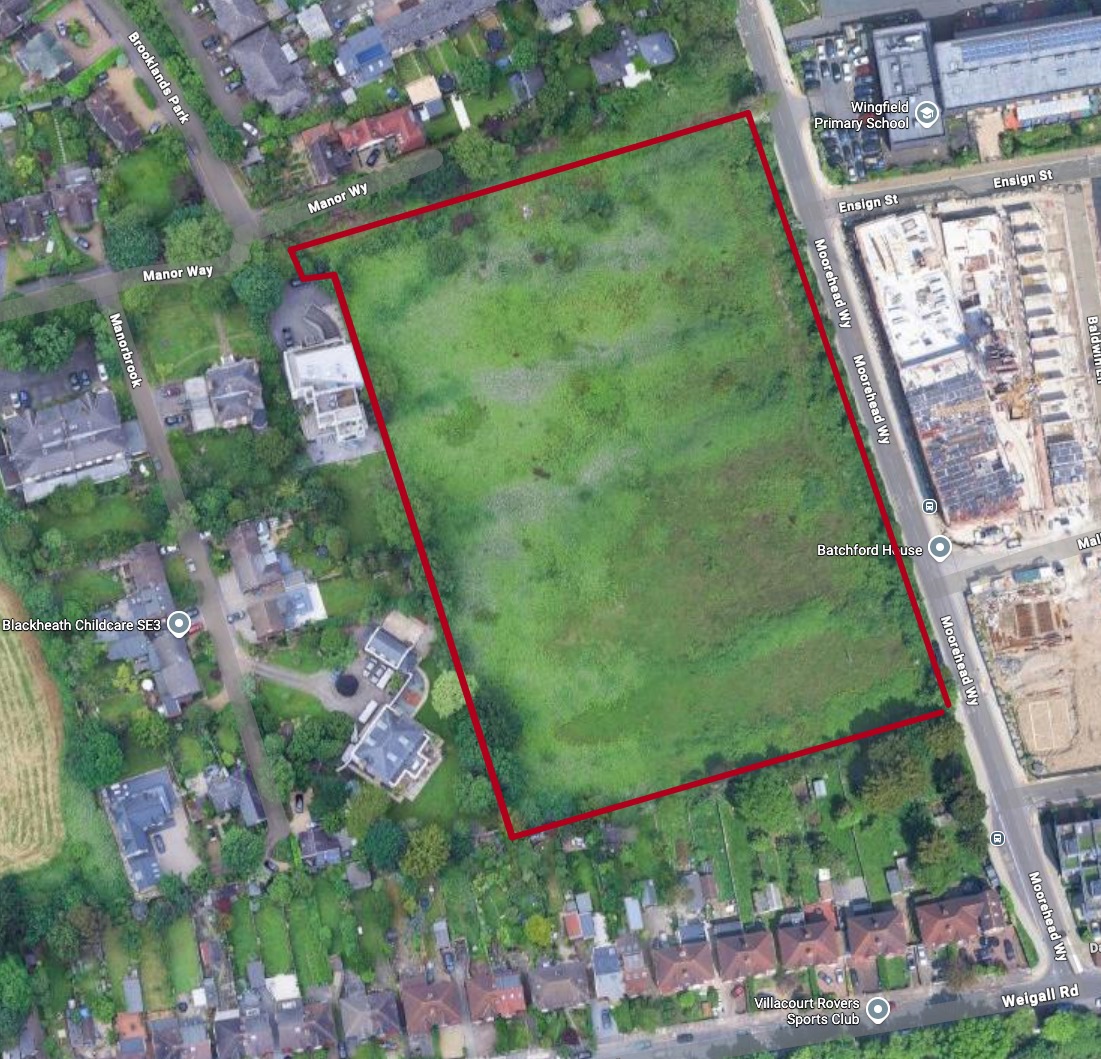
2. Contravenes Restrictive Covenants
The land in question is subject to long-standing restrictive covenants which clearly state that only detached houses may be built. These covenants were expressly written to prevent the type of high-density development now being proposed.
3. Contravenes the High Court ruling
The proposal directly contravenes the High Court’s ruling in 2017 that the total number of dwellings constructed upon the Property shall not exceed 130. The ruling was intended to prevent the kind of high-density development currently being proposed.
4. Loss of Privacy and Overbearing Impact
The proposals would lead to loss of privacy, quiet, spaciousness, outlook and ambience for people living on the development’s borders. High-rise or multi-storey buildings would overlook neighbouring homes and gardens, resulting in a serious and unacceptable loss of privacy. Existing properties would be dominated visually, with adverse impacts on residential amenity that cannot be mitigated through minor design adjustments.
5. Creation of a Rat Run
The estate is currently a very low traffic neighbourhood. At its recent consultation meeting, Derreb clearly set out the intention that there should be access to and from the new development via the Cator Estate, with the suggestion that this could, in some unspecified way, be limited to residents of the development.
The idea that traffic could be restricted to residents of the new development are unrealistic. Instead, this would create a route between the Kidbrooke Estate and Blackheath that would be used not only by people living in the new development, but by residents of the wider Kidbrooke development and beyond. Brooklands Park has already seen a substantial increase in pedestrians using this route, and it would be wholly expected for motorists to do the same. It is also likely that the route would quickly be discovered and used by people short-cutting from the A20 to Blackheath.
This would fundamentally change the nature of the area, increasing through-traffic and undermining safety and tranquillity.
It also brings the prospect that in due course a different view might be taken and planning permission for access onto the estate roads might be given along with permission for such other built development as might be required to enable access for vehicles to enjoy such access.
During the previous High Court case, Mr Macey, owner of Derreb Ltd, acknowledged that a similar scheme, but with fewer proposed dwellings, would potentially place a significantly increased burden on the Cator estate’s roads. Having previously acknowledged the potential impact and developed proposals to restrict access, it is obtuse for Derreb to re-introduce access.
6. Danger created by vehicular access
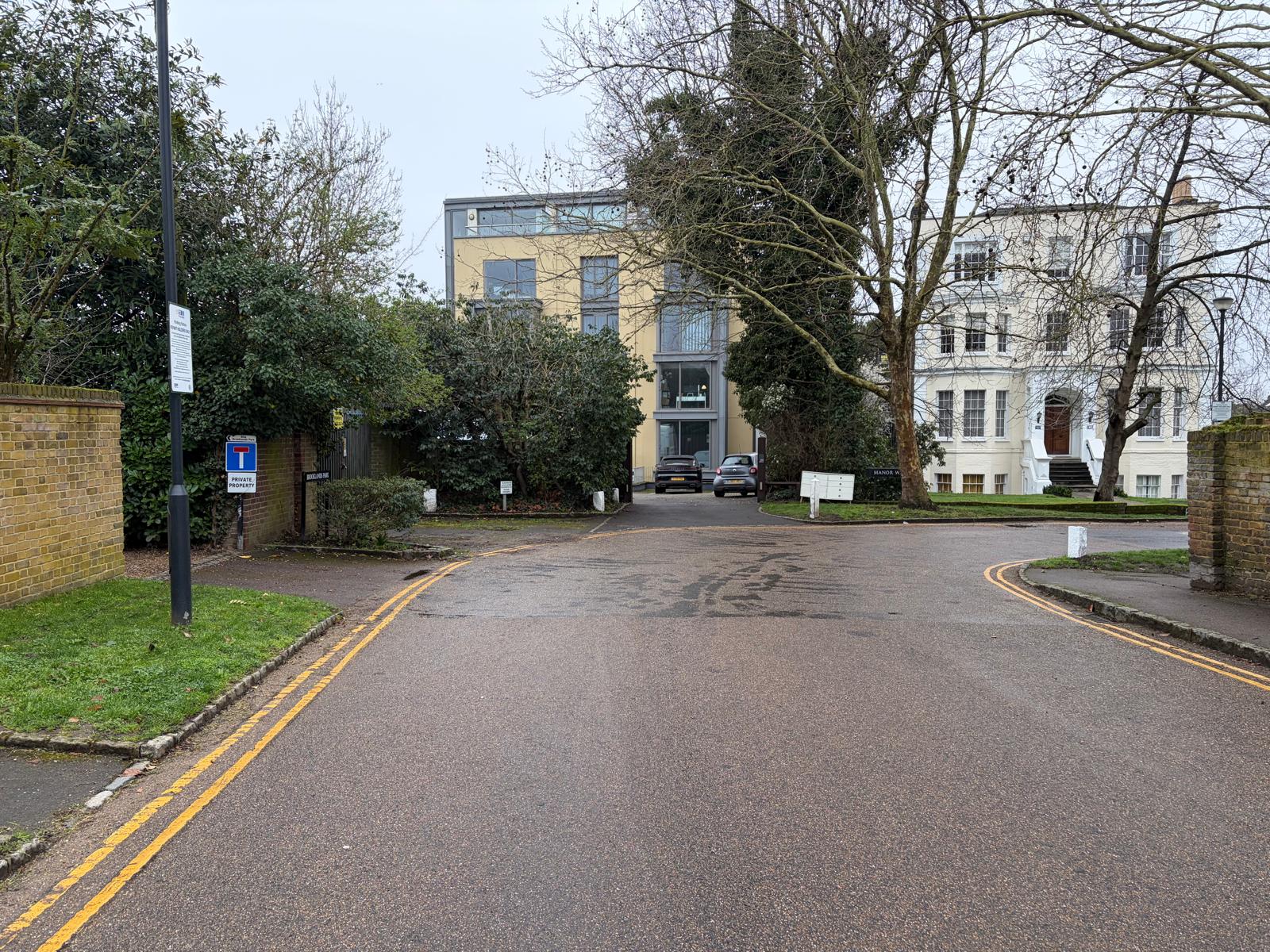
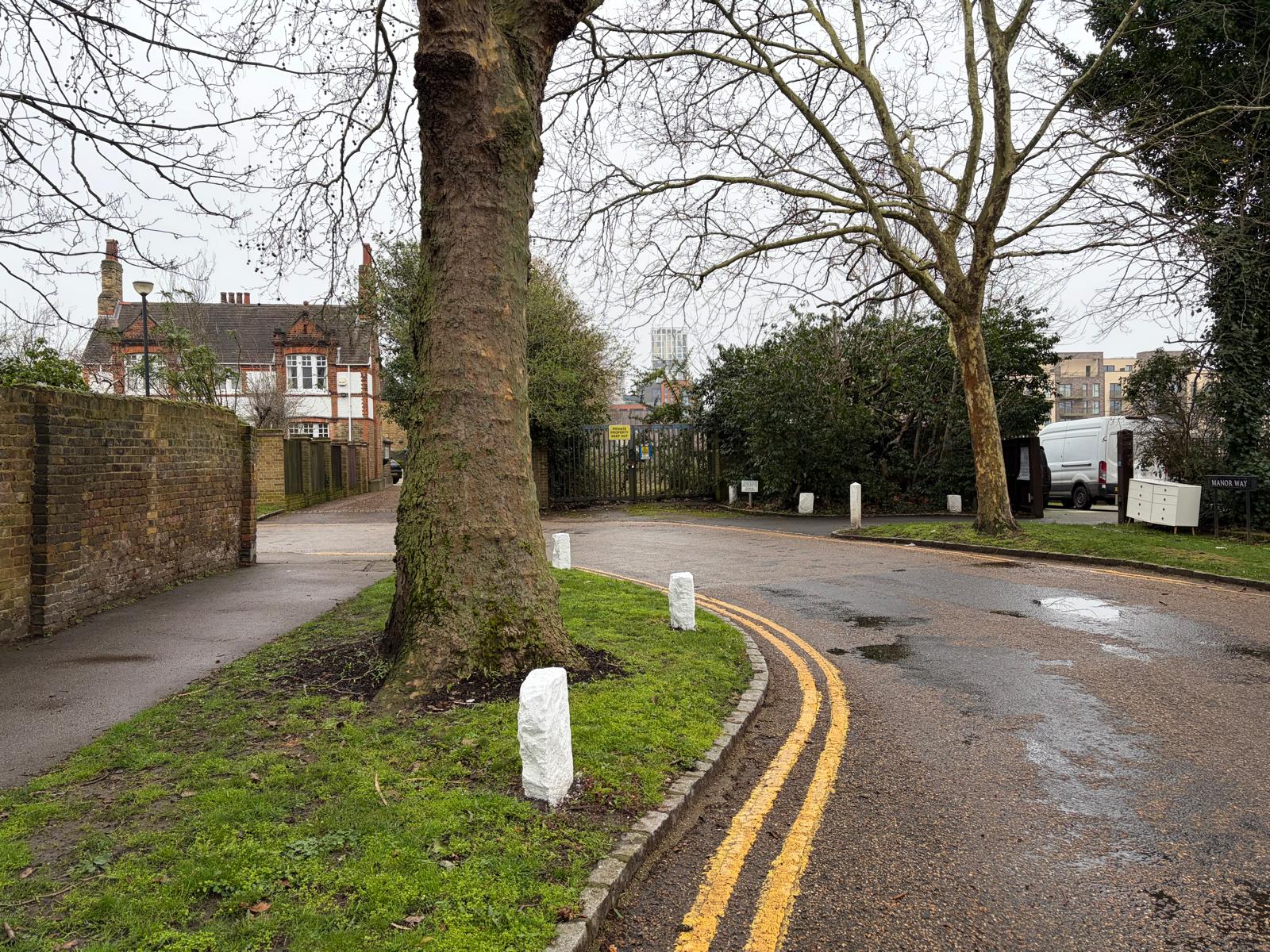
Access from the Cator estate to the site is at its northwest corner where Brooklands Park and Manor Way meet. The access point is simply too narrow to safely accommodate vehicular access and access by pedestrians, bicycles and mobility scooters, as all would be forced onto the same narrow strip. Furthermore, this is an extremely narrow 90 degree corner, with no visibility for traffic travelling from Manor Way onto Brooklands Park and vice versa. To introduce an access road feeding onto this point is clearly dangerous.
7. Contravenes Royal Borough of Greenwich's Local Plan
The local plan describes how ‘A pedestrian connection to Manor Way and Brookland Park should be integrated into the scheme,’ and a drawing of the site explicitly marks a pedestrian and cycle route only linking the development to the rest of the Cator estate.
8. Contravenes the 2017 High Court ruling on vehicular access
Vehicular access via the Cator Estate directly contravenes the High Court’s ruling in 2017 that expressly sets out that there should be no motorised access via the Cator estate, and that access to and from the estate be limited to pedestrians, pedal cycles and mobility scooters.
9. Impact on Private Roads
Traffic generated by this development would use the private roads of the Cator Estate. These roads are not owned or maintained by the Royal Borough of Greenwich. It is therefore inappropriate and inequitable to allocate development that would materially increase wear, congestion, and maintenance burdens on infrastructure for which the Council bears no responsibility, but which residents pay for.